BUILDING FUNDAMENTALS
Minecraft Dome Roofs: Sizes, Layer Plans, and When to Use One
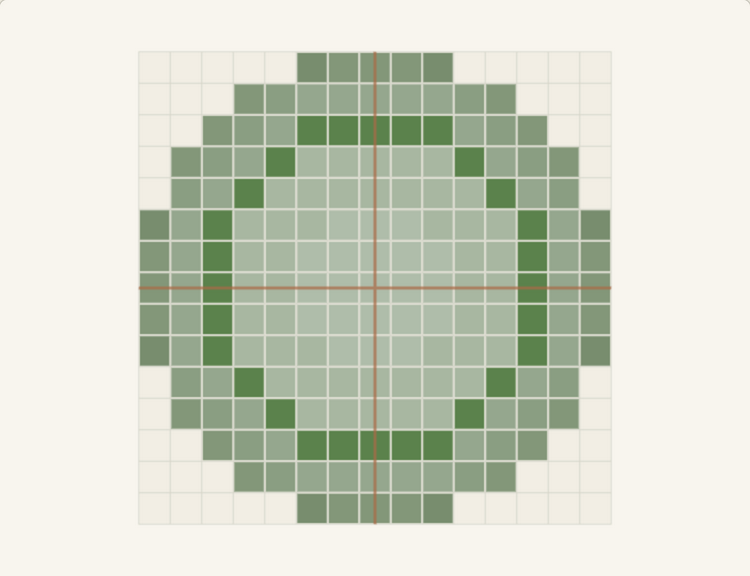
A dome is half a sphere with a job to do
Dome roofs cap round rooms, towers, temples, and observatories. Because a dome is a hemisphere, its widest layer must match the room it covers exactly — which makes the footprint circle the first decision and the roof the last.
The dome generator draws a hemisphere from the widest base layer up to the peak, one top-down grid per layer, with per-layer block counts. The numbers below are verified from that same math.
Verified sizes and material counts
Dome costs scale with the footprint, and a hollow shell is far cheaper than a solid cap. For the diameters that cover most builds:
- 11 blocks: 153 blocks hollow, 418 filled, 6 layers — gazebos and small rotundas.
- 15 blocks: 285 blocks hollow, 984 filled, 8 layers — round rooms and tower caps.
- 21 blocks: 569 blocks hollow, 2,647 filled, 11 layers — grand halls and temple roofs.
Match the base layer to the room, not the wish
The dome's first layer is its widest circle. If the room below is a 15-block circle, the dome base is that same 15-block ring — 40 blocks around, the same as the footprint outline on the circle chart. Stretching a dome wider than the walls leaves an overhang that looks intentional only when it is planned as one.
Check ceiling height before choosing the diameter: a dome needs headroom equal to roughly half its diameter. A 15-block dome rises 8 layers, so the walls below it should stand at least 4 to 5 blocks tall before the curve starts, or the interior feels like a lid.
- Start the curve at wall heightLet straight walls carry the vertical, then begin the dome; roofs that start at floor level swallow usable space.
- Windows live in the lower layersCut skylights or arched windows into layers two to four, where each layer is still wide enough to survive an opening.
- Keep the peak solidThe top two layers are small enough to fill solid; a hollow peak leaks light patterns and looks patchy from outside.
Building the layers in order
Domes build fastest from the base up, one verified grid at a time. The first layer is the only circle you share with the walls; every layer after it is smaller, so each one is faster than the last.
- Generate the dome at your diameter and confirm the first layer matches the room's footprint ring.
- Place layer one on top of the walls, checking it against the footprint before continuing.
- Build upward through the layers, stepping in as the grid narrows; each layer's block count is listed in the generator.
- Fill the final two layers solid and cap the peak; light the interior before the last layer closes.
When a dome is the wrong roof
Domes suit round and square rooms with a central peak. They fit poorly on long rectangular halls — a barrel-vault of repeated arches covers those better — and on builds that need a flat, walkable roof for farms or defenses; a flat ring roof with crenellations keeps the top usable.
For complete balls rather than caps, use the sphere workflow instead: a 15-block sphere is 530 blocks hollow against the dome's 285, because the ball repeats the lower half on top.